Assessment that proves its worth: end-of-year results and what to do with them before school finishes
Estimated reading time: 5 minutes
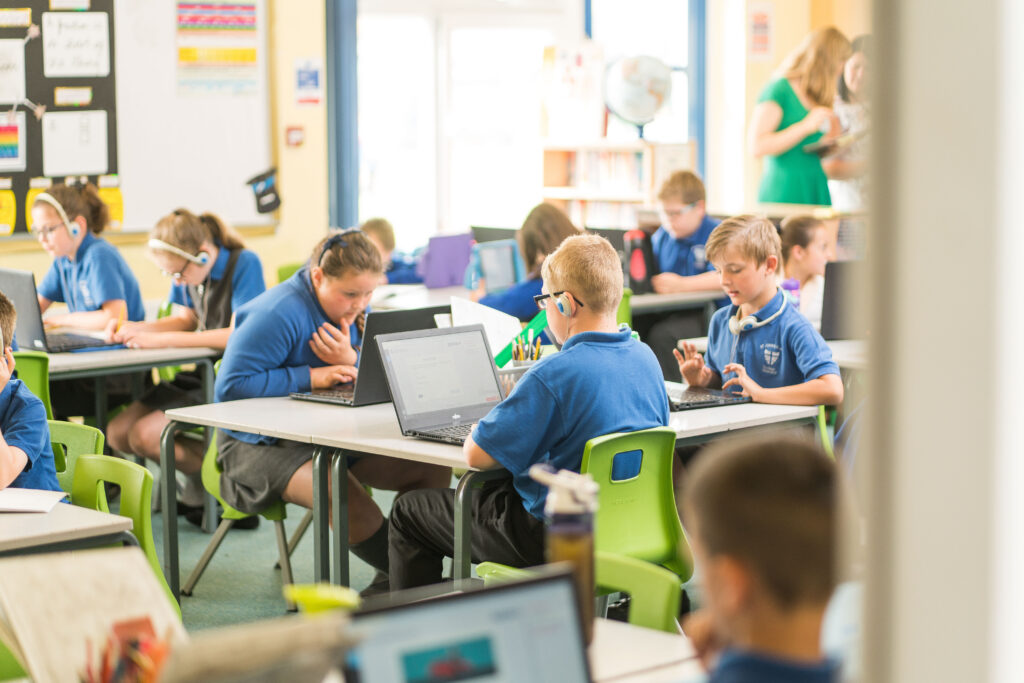
The end of the year is when teachers know their classes best. After every lesson taught and every interaction, the picture they have built of each pupil is detailed and specific: who needs to be stretched, who needs more support, who has grown in confidence over the year, which topics landed and which will need revisiting. That knowledge, accumulated through months of daily teaching and observation, is one of the most valuable things a school has.
End-of-year assessments add something distinct to this. They provide the consistent, benchmarked intelligence that lets school leaders look across year groups rather than into individual classrooms: how a cohort sits relative to national expectations, where patterns emerge that cross class boundaries, and what the data can tell you about aspects of pupil experience that don’t always surface in results alone.
Used well, end-of-year assessment does not replace what those teachers know; it extends it.
What good end-of-year assessment data does
The benchmarked picture that assessment provides is one that no teacher can produce from professional observation alone. A class can feel strong, and be strong, but without comparison data there is no way to know whether that strength is above, at, or below national expectations for the year group. End-of-year assessments, designed against year-specific curriculum standards and benchmarked against national averages, provide that external reference point. If a Year 4 cohort is performing confidently in SPaG but showing consistent gaps in number and place value, knowing that is not just useful for the class teacher; it is actionable intelligence for school leadership.
This is where the school leadership layer matters. Individual teachers have close knowledge of their classes; what leaders need is a consistent, comparable picture across year groups. Reliable end-of-year data allows SLT to identify patterns that cross class boundaries, spot subjects or year groups where intervention is most needed, and build the kind of evidenced progress data that supports conversations with governors and inspectors. Where assessments are designed against year-specific standards and benchmarked against national averages, they provide an honest account of where the school sits: intelligence that professional judgement, however experienced, cannot reliably supply on its own.
For schools preparing pupils for formal assessments, there is a further argument for building structured testing into the school year: familiarity. Pupils who regularly sit assessments are better prepared for the format, the pacing, and the expectations when it matters. This is not about teaching to the test; it is about ensuring that the experience of sitting a structured assessment is familiar ground before it counts.
The practical value of all of this depends on what happens with the data before the summer break. Topic-level results that arrive in the final weeks and sit unread until the start of next year have not done their job. The same results, used to plan curriculum adjustments, identify pupils who will need early support next year, and brief year leaders on whole-school patterns, become actionable: a clear map for the year ahead rather than a record of the year that has just ended.
What results can’t tell you
Academic assessment answers one set of questions. Wellbeing data answers another. The two together give school leaders a fuller intelligence picture than either can provide alone.
A pupil who ends the year below expected standards in maths but who reports high levels of engagement and connection to school is a different situation from one who presents the same academic results alongside disengagement, anxiety, or a low sense of safety. Knowing which situation you are looking at changes what you do next.
End of year is the natural moment to take stock of both. Most schools have a strong sense of how their pupils are doing emotionally, but systematic wellbeing data, collected consistently across the school rather than gathered anecdotally, surfaces patterns that are easy to miss in the day-to-day. It also reaches pupils who appear fine but who report differently when given a confidential, structured opportunity to reflect.
CENTURY’s Student Wellbeing Tool is built on the Student Subjective Wellbeing Questionnaire (SSWQ), a validated research instrument that measures five key dimensions: School Connectedness, Academic Efficacy, Joy of Learning, Educational Purpose and Safety. It takes under five minutes for pupils to complete, can be run each term to track how wellbeing shifts across the year, and includes a confidential flagging system for pupils who may need immediate support.
The value of running this alongside academic end-of-year assessment is precisely the triangulation it enables. A year group with strong attainment data but low scores for School Connectedness and Safety is telling its school something important. Identifying that, and acting on it, is what turns end-of-year data into a genuine planning tool.
The full picture in one place
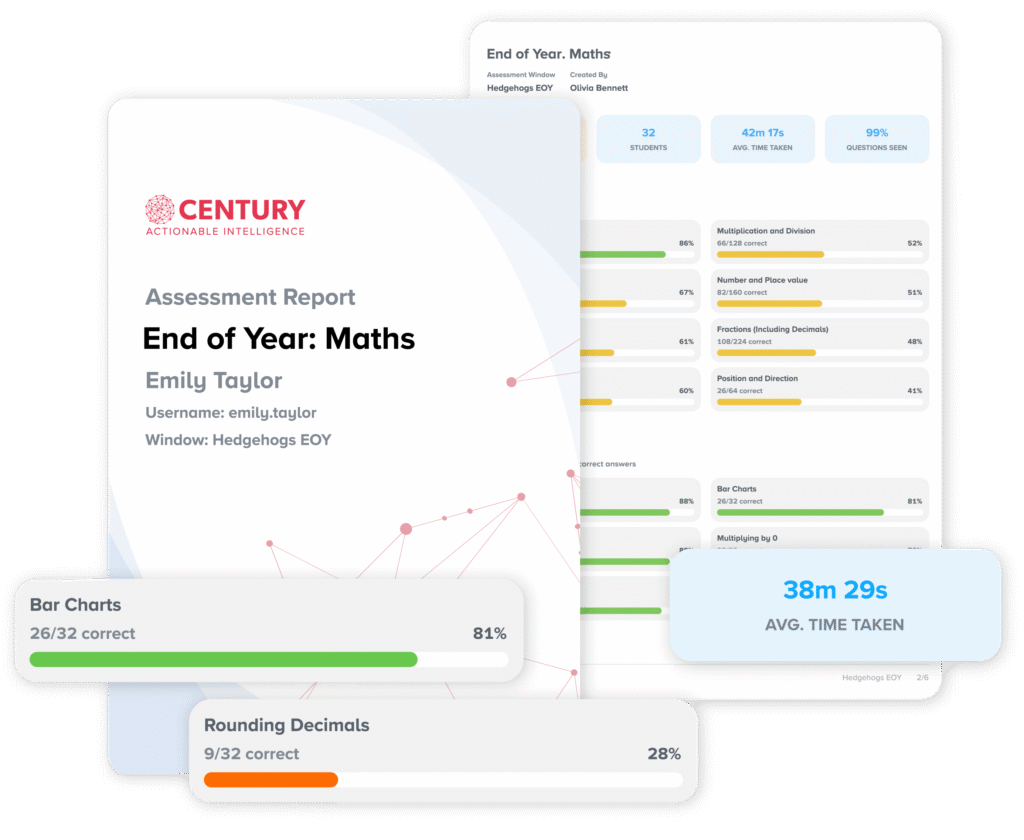
An assessment that earns its place in a school’s calendar does several things well. It arrives in time for its findings to be acted on, provides an external reference point that professional judgement alone cannot supply, and connects what it reveals directly to actionable next steps rather than a report that sits on a shelf.
CENTURY’s Academic Assessments for primary schools are built around these principles. Covering English punctuation and grammar, maths and science in line with the national curriculum for KS2, they are completed within a 50-minute lesson and automatically marked, meaning results are available immediately. Reports go beyond overall scores to highlight topic-level strengths and areas for development, with immediate suggestions for addressing gaps using learning materials aligned to the national curriculum. Where pupils need support, CENTURY’s platform connects assessment results directly to personalised recommended next steps for intervention, so the assessment is not a standalone event but the starting point for what comesnext.
The Student Wellbeing Tool sits within the same platform. Running academic and wellbeing assessments on CENTURY means the data lives together, making it straightforward to build the combined intelligence picture without switching between systems.
Schools that use CENTURY consistently find that assessment becomes part of the rhythm of teaching and pastoral care, rather tha
n a concentrated event at the end of the year. CENTURY’s impact analysis of SATs outcomes across the Discovery Multi-Academy Trust, a group of 15 primary schools, found that high CENTURY users were nearly 1.5 times more likely to meet the expected standard across maths, reading and GPS than low users; read the full study here.
The teachers who knew their classes in June will still know them in September. End-of-year assessment gives them something more to work with: a national benchmark set against their professional judgement, a systematic picture of how wellbeing has shifted, and a clear map of where the curriculum needs attention. CENTURY’s Assessment Suite is designed to provide all three, in one platform.
If you would like to see CENTURY’s academic assessments and wellbeing tool in action, our team would be happy to show you.
CENTURY in the news
View all News
-

Blog
13th October 2026
How we know our AI marking is accurate
Our AI marking agrees with expert markers on over 95% of decisions. Here is how we built the evaluation dataset behind that figure, and why the process matters more than the number.
Read more
-

News, Blog
13th October 2026
Marking maths the way an examiner would: introducing Maths Prep GENai
Can CENTURY mark the method, not just the answer? Maths Prep GENai, now in beta, marks GCSE and IGCSE maths working against the mark scheme the way an examiner would, then shows learners exactly where they lost the mark and…
Read more