CENTURY + PiXL English Challenge 2025 Competition Results
Estimated reading time: 1 minute
We wanted to say a massive thank you to all of you that participated in the CENTURY + PiXL English Challenge.
Between 28th April and 9th May, nearly 2,000 students across PiXL member schools used CENTURY’s award-winning AI-powered teaching and learning platform to study English.
The winning school was determined based on the average number of questions answered correctly by students.
There has been an extraordinary amount of effort put in by everyone with over 125,000 questions answered in total.
Special congratulations go to our winners below and a very special mention to Jaspreet Singh from Tudor Primary School for 1,005 questions answered and 115 nuggets completed!
Headline statistics:
Total Time Spent (Minutes): 58,948 or 982.3 hours
Total Questions Answered: 126,521
Total Questions Answered Correctly: 90,521
Total Nuggets Completed: 14,235
Total Students Participating: 1,974
KS2 Winner: Paston Ridings Primary School

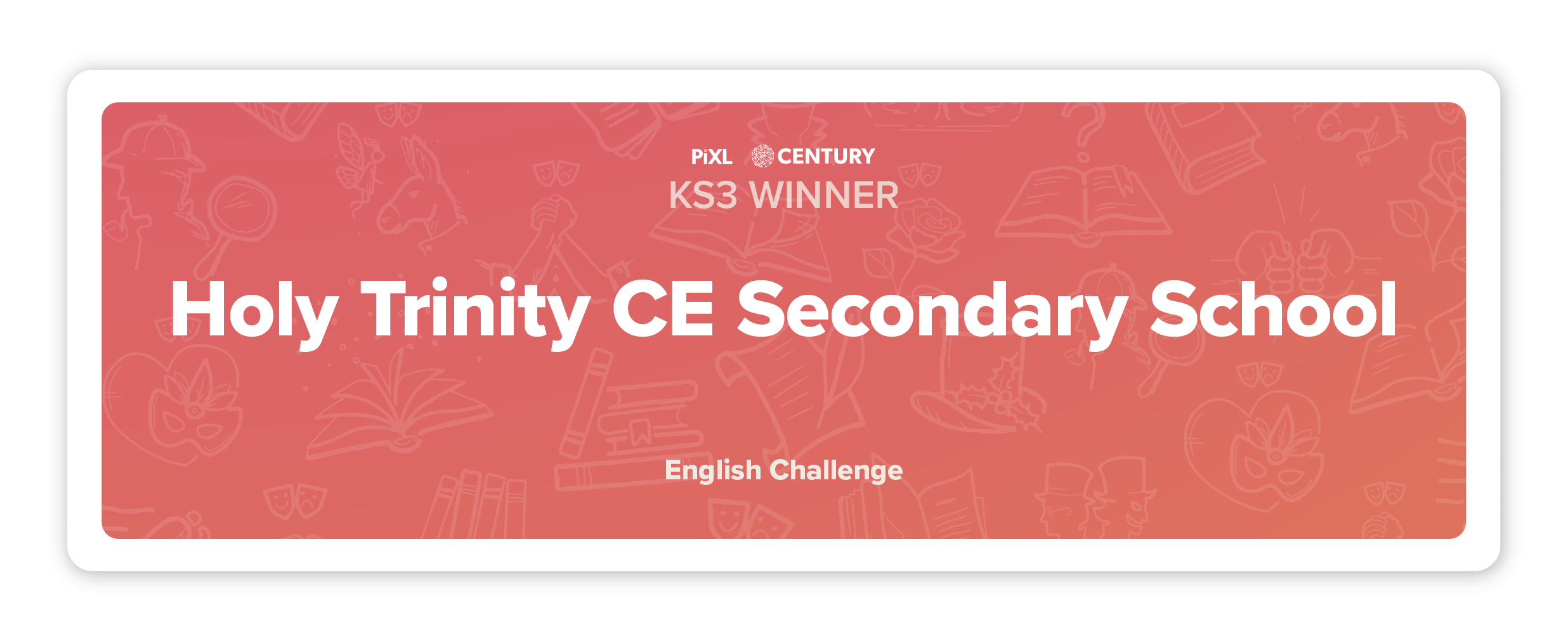
KS3 Winner: Holy Trinity CE Secondary School
KS4 Winner: Brighton Hill Community School
Individual Student Winner: Jaspreet Singh from Tudor Primary School
Overall Winner: Tudor Primary School
For more information on how you can use CENTURY for English for primary, see here. For information on CENTURY for secondary English, click here.
CENTURY in the news
View all News
-

News
21st October 2026
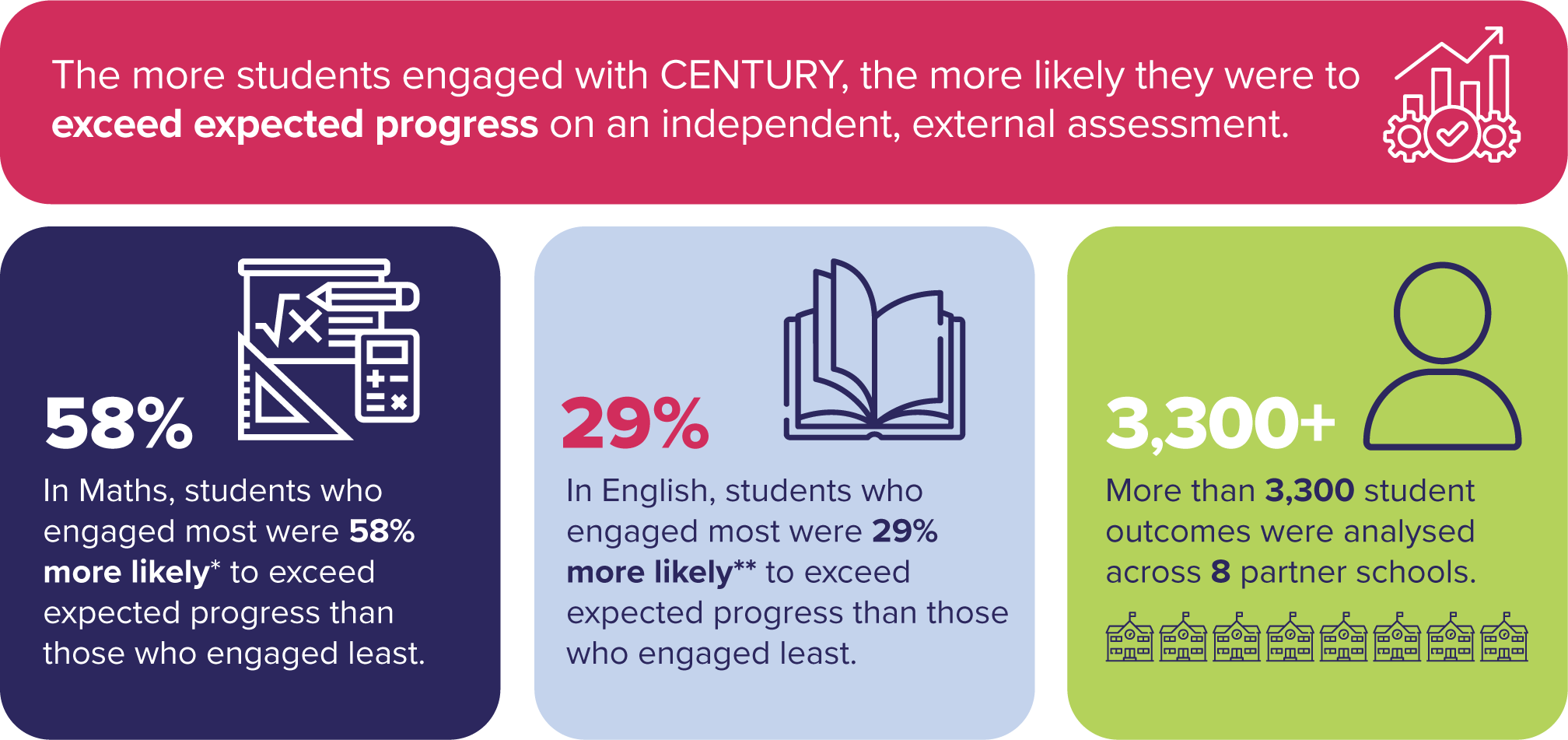
International study finds students using CENTURY up to 58% more likely…
A new study of more than 3,300 progress outcomes across eight Inspired Education Group schools found students who engaged most with CENTURY were up to 58% more likely to exceed expected progress in maths and 29% more likely in English.
Read more
-

Case studies
19th October 2026
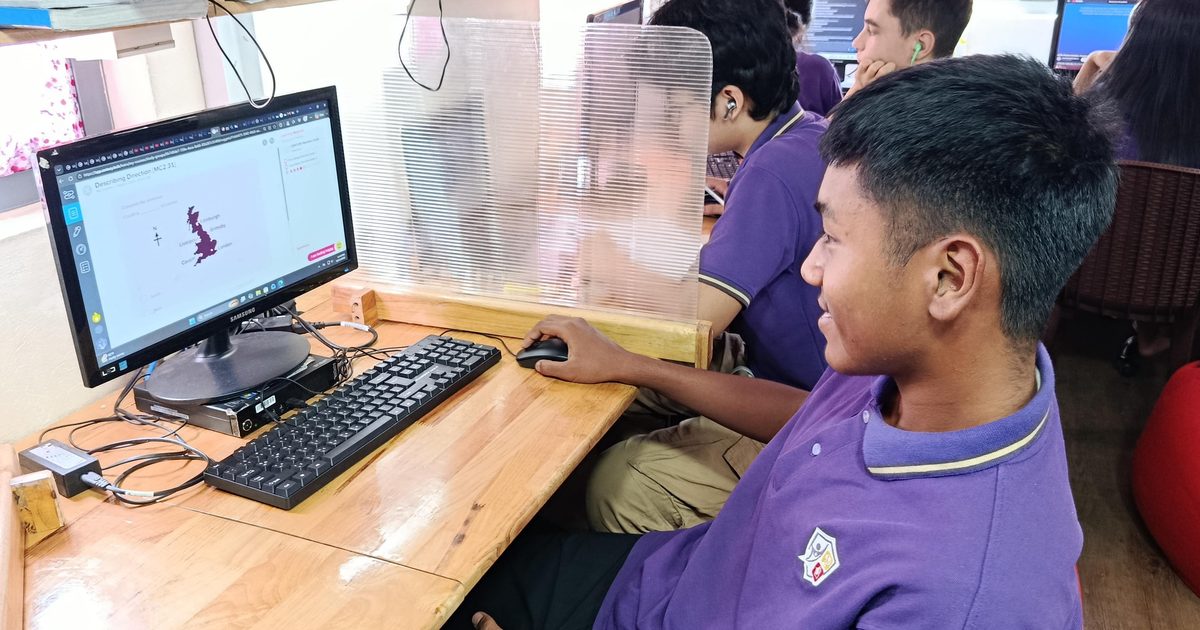
How Myanmar Vision International School delivers personalised learning for IGCSE
Myanmar Vision International School in Yangon made CENTURY the main way it teaches IGCSE maths and science. IGCSE Coordinator Andrew Rogers explains how personalised learning, backed by one-to-one support from learning guides, works for a small cohort.
Read more