Driving Long-Term Academic Progress and Redefining Classroom Intervention at Newton Farm School
Estimated reading time: 7 minutes

Newton Farm School is a highly successful state primary school based in Harrow, London. With a strong commitment to educational technology, the school takes a purposeful approach to integrating digital learning platforms into everyday teaching and learning, helping to maximise progress and support every child in reaching their full potential.
With a vibrant and diverse school community – including over 90% of pupils who speak English as an Additional Language (EAL) – Newton Farm has embedded CENTURY Tech into its daily routines for more than five years. We spoke to Andrew Martinez, Computing and English Lead, about how the platform has supported the school in breaking down learning barriers, strengthening pupil progress, and enhancing teaching and learning.
How long has Newton Farm School been using CENTURY, and what are some of the key priorities and challenges for your pupils?
We have been using CENTURY for around five years now. Our school is very committed to technology, and our mindset has always been simple: if there is something that can add value for students while also reducing teachers’ workload so we can spend more time with the children, that is exactly the kind of solution we want to embrace.
In terms of our main priorities, Harrow as a local authority has a high number of EAL students, and at Newton Farm more than 90% of our pupils are EAL. Writing is always a major focus for us, alongside maths and the other core subjects, but writing and EAL provision are the two areas that can present the biggest barriers to learning. As a result, we were looking for a solution that could help us support students more effectively in those areas.
Even with mathematical reasoning, students need a strong grasp of English to access and answer questions effectively. We often see pupils who are very strong in fluency, but as soon as the reasoning element is introduced, that language barrier can start to emerge. We wanted a way to identify those challenges early and provide targeted support to help students overcome them.
How does CENTURY help teachers identify and close gaps in learning, particularly for your EAL learners?
There is so much to cover in the curriculum, and there is always pressure to get through everything. Sometimes the foundations and fundamental skills can be overlooked. One of the things CENTURY does particularly well is help teachers identify the areas where children may be falling behind, allowing us to pinpoint small groups who need additional support.
For grammar specifically, our approach is to weave it into our regular English lessons to make the best use of curriculum time. CENTURY gives us visibility into whether particular skills have been taught and whether some children are still struggling with them after the class has moved on. Having that data consistently, year after year, creates a compounding benefit. Instead of a child struggling with something in Year 2 and nobody realising until much later, teachers can spot those gaps early and intervene straight away.
It also strengthens our conversations with parents. For those who are highly engaged, we can identify specific areas where their child would benefit from additional practice and provide targeted support through homework and follow-up activities.
How do you structure your challenge sessions, and how do they cater for pupils across the ability range, from those needing extra support to your higher attainers?
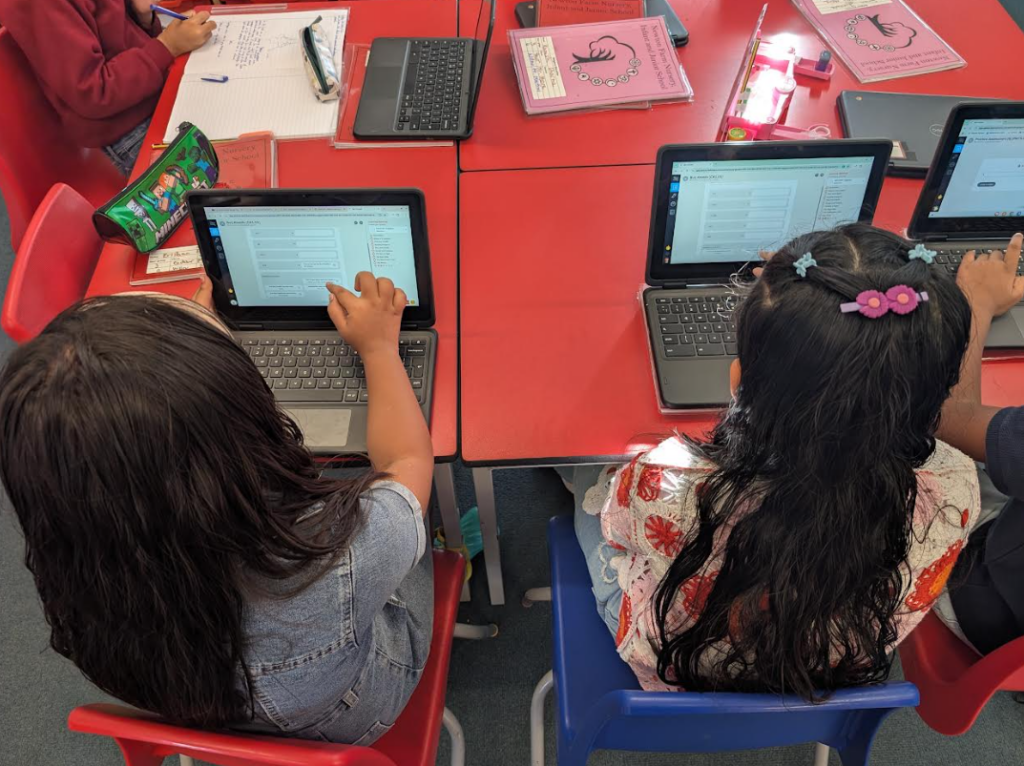
We have organised our timetable so that we run what most schools would call intervention groups, but here at Newton Farm we call them challenge sessions, and that change came directly from parents. We had families whose children were working at greater depth asking why their child was in an “intervention,” because that word didn’t reflect what was actually happening. Wherever a child’s level is, we want them challenged to reach the next one.
We run challenge sessions in small groups during our daily assembly time when other students are out of the classroom, so that every child has an opportunity for focused improvement. CENTURY’s data and the in-class picture together tell us straight away where each child actually is: who hasn’t made the progress we’d expect, who’s ready to be pushed to the next step, and who needs some consolidation. That’s what lets me stretch, consolidate, or properly support, rather than setting the same task for the whole class and having my higher-attaining pupils think, ‘why am I being set this?’. For example, for our mathematicians that have a really strong foundation in decimals and fractions, there is no reason to hold them back from deepening their understanding with tasks about percentages if they have the motivation and drive to explore further. CENTURY allows us to do this.
How does CENTURY impact your teachers’ daily workload and classroom management?
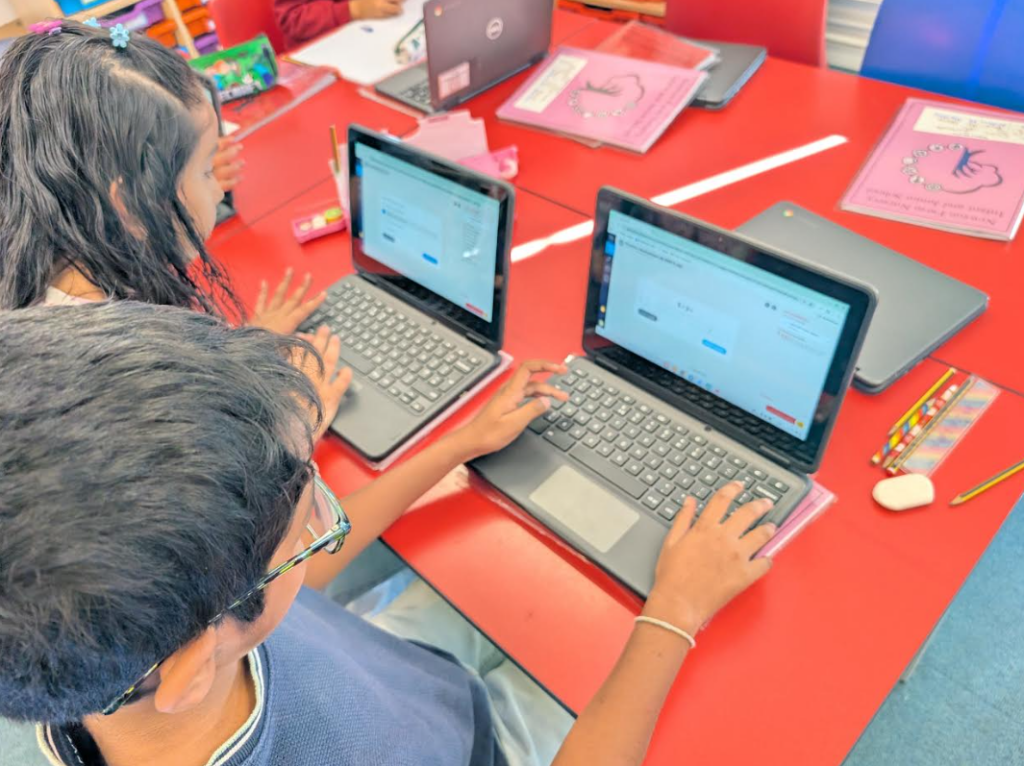
The biggest difference is how little extra time it takes to act on what the data tells us. Previously, when we were paper-based, if I wanted to give different groups different practice, that meant different printouts for each one. Now it is a press of a few buttons: I know which children need which area of focus, and CENTURY does the rest. There is also the automated pathway running alongside everything, so pupils who want to keep practising in their own time can, without me needing to set anything extra at all.
It frees me up to put my attention, and my teaching assistant’s, where it is actually needed. While pupils who are ready for more get on independently with work that extends them, we can spend proper time with the groups who need more direct guidance. It is an extra layer of reassurance, really: a way of being confident every child is getting what they need, without the admin burden that would once have made that impossible to manage.
With younger learners, screen time is always a topical discussion. How do you navigate this as a school?
I recently had to present to our governors’ safeguarding committee about digital safeguarding, and one of the points raised by a parent governor was around screen time. We were prepared with the evidence that it is not simply the amount of screen time that matters, but the purpose and quality of the content children are engaging with.
Whether pupils are using an interactive whiteboard or a device in the classroom, the content they are accessing is intentionally educational. They also still have plenty of time away from screens: they have music, PE, and three breaks a day at our school, so we make sure there is a good balance.
When parents raise concerns about screen time, it often comes from what they see outside of an educational context, where children may go straight onto gaming consoles or social media after school. In the classroom, however, devices are used in a very structured way, with clear boundaries and for specific educational purposes.
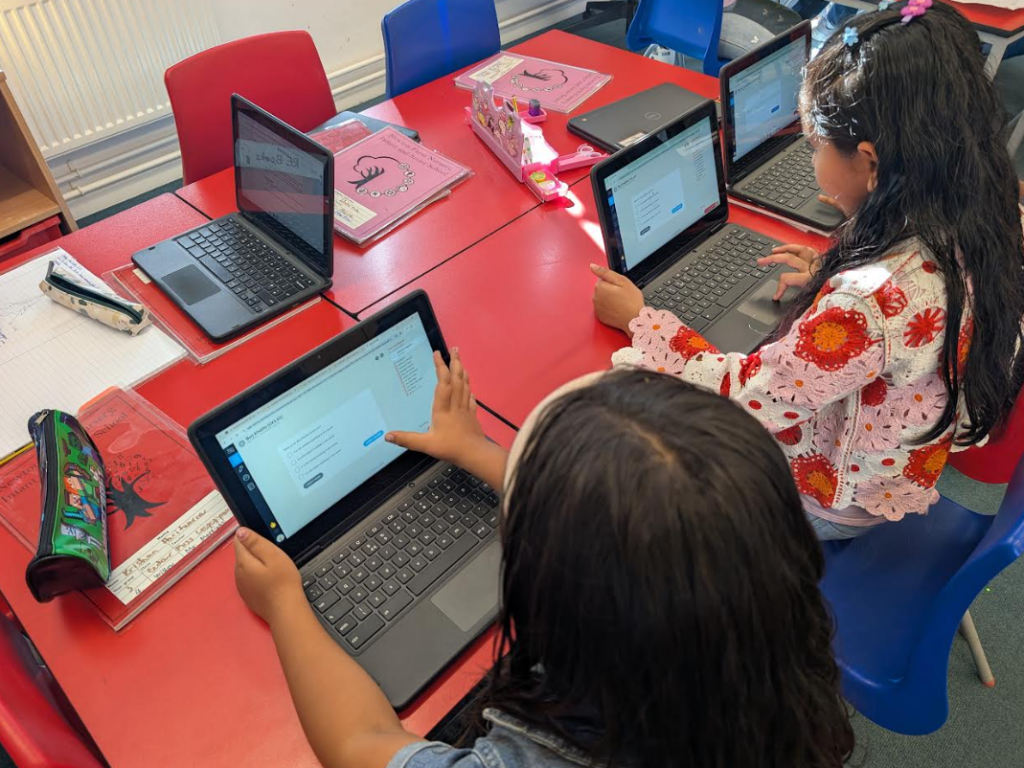
What tangible academic impacts have you seen since embedding the platform?
In the run-up to SATs, our Year 6 pupils make really good use of the platform. We use it for SATs-style practice questions, and we also set assignments for pupils to complete over the school break: not asking them to spend hours on it, but encouraging a small amount of consistent practice each day to keep them engaged and in the right mindset before returning to school.
We always aim high, with a target of 90% reaching the expected standard and at least 40% achieving greater depth, and we are consistently around that level. We feel that is a strong achievement year after year, and CENTURY is one of the core tools that supports us in getting there for the majority of our pupils. Even those who have found certain areas more challenging are able to make progress and reach the expected standard because of the consistency and targeted support it allows us to provide.
What advice would you give to another school considering adopting CENTURY?
I would say to focus on the areas that are going to give you the most value first. CENTURY has grown massively: if you look at where it was when it was relatively new compared to where it is now, the platform has developed so much. For a school joining today, there is a huge amount of potential, which can feel like a lot to take in at first.
My advice would be to take it step by step and start with the areas that will have the biggest impact on your daily practice. Even if you begin by using the core subjects to give you that additional layer of data, helping you identify who may be struggling with areas such as basic operations or fractions, there is already so much value there. Once you start to see the impact it has on your pupils and how it supports and informs your teaching, you can build on that foundation and explore the wider features available.
CENTURY has so much to offer, and the more embedded it becomes within your school, the more opportunities you will find to use it to support learning.
Ready to close learning gaps earlier at your school?
New Customers: Book a demo today to see how CENTURY can help you support EAL learners, spot gaps early and stretch every pupil, without adding to teacher workload.
Existing Customers: Contact your Account Manager or email support@century.tech to explore our latest updates, including Guardian Insights and baseline assessments.
CENTURY in the news
View all News
-

News
21st October 2026
International study finds students using CENTURY up to 58% more likely…
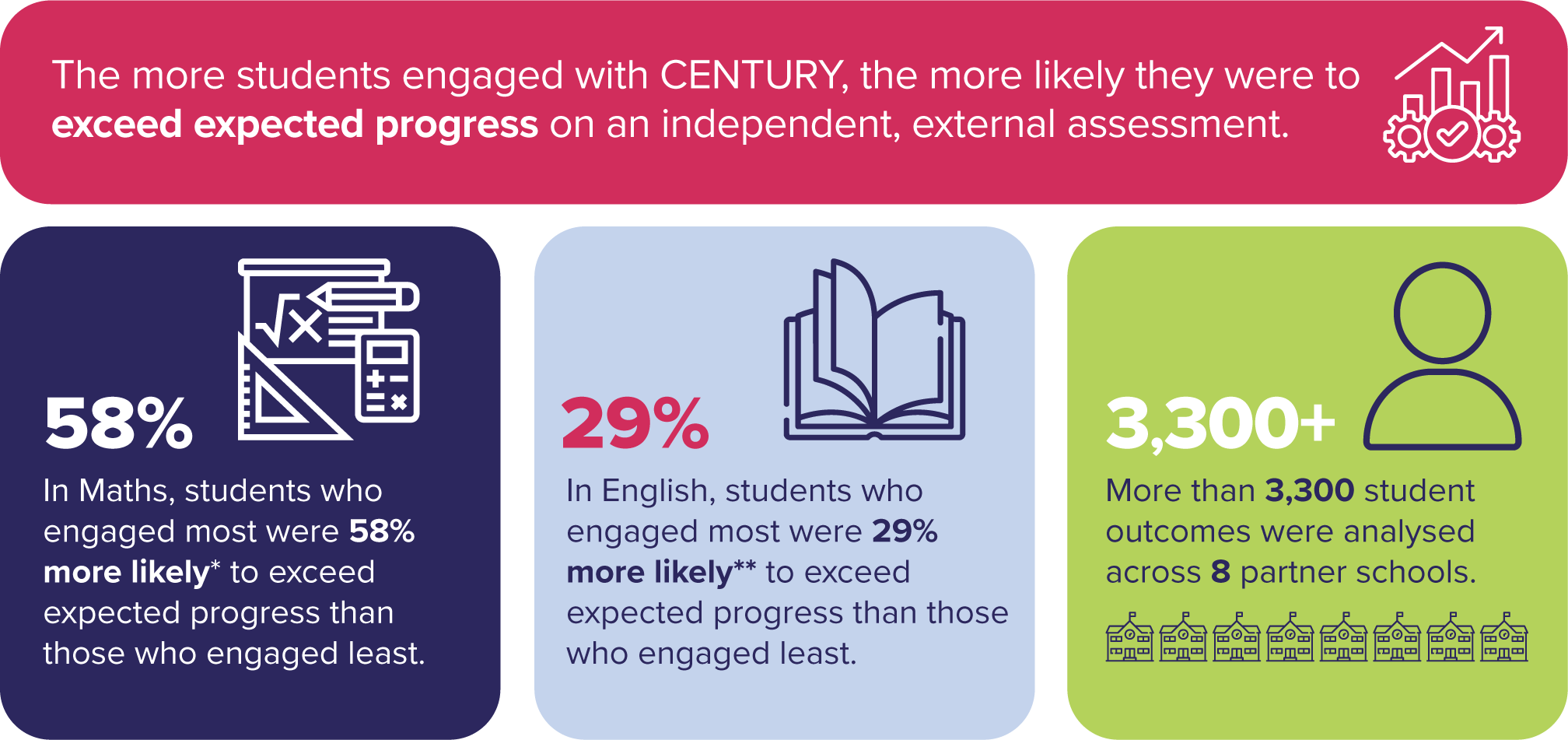
A new study of more than 3,300 progress outcomes across eight Inspired Education Group schools found students who engaged most with CENTURY were up to 58% more likely to exceed expected progress in maths and 29% more likely in English.
Read more
-

Case studies
19th October 2026
How Myanmar Vision International School delivers personalised learning for IGCSE
Myanmar Vision International School in Yangon made CENTURY the main way it teaches IGCSE maths and science. IGCSE Coordinator Andrew Rogers explains how personalised learning, backed by one-to-one support from learning guides, works for a small cohort.
Read more