Wellbeing Moves Centre Stage in Ofsted’s New Framework
Estimated reading time: 5 minutes
Educational priorities are shifting, and student wellbeing has moved from the periphery to the heart of inspection criteria across many educational settings. Ofsted’s inspection framework now includes detailed report cards and a revised evaluation system that includes specific focus on inclusion and wellbeing. These updates aim to provide a more nuanced understanding of performance, ultimately benefiting educators, parents, and stakeholders alike. This shift recognises what educators have long understood: that true educational success encompasses far more than examination results.
At the centre of this transformation lies stronger safeguarding expectations and an enhanced focus on wellbeing through two key evaluation areas: Personal Development and Wellbeing in state schools and Participation and Development in further education and skills settings. Inspectors will now evaluate how schools, colleges and training providers support personal development, wellbeing, mental health and character growth alongside traditional measures like achievement and curriculum quality. Crucially, metrics such as attendance will no longer be judged in isolation but understood within the broader context of student wellbeing, safeguarding, and barriers to engagement.
What’s Changing in the Framework?
The wellbeing focus varies by educational setting but maintains consistent core principles across all provision types:
- Wellbeing is a core focus: new grading sections for wellbeing in both schools (Personal Development & Wellbeing, (Ofsted, 2025a)) and further education and skills providers (Participation & Development, (Ofsted, 2025b)) require organisations to demonstrate how personal development is weaved through the curriculum and prioritise students’ wellbeing, mental health and resilience.
- Stronger safeguarding expectations: leaders must show evidence of proactive, preventative approaches to safeguarding and demonstrate that student concerns are heard and acted upon.
- Inclusive culture under scrutiny: providers must ensure comprehensive support for learners who “are disadvantaged, those with SEND or high needs, those who are known (or previously known) to social care, and those who may face other barriers to their learning and/or wellbeing, such as young carers” (Ofsted, 2025b).
- New inspection report card: features a new, five-point grading scale, a dedicated section for wellbeing, safeguarding (graded simply as met/not met), and a new “what it’s like to be a pupil at this school” section. This granular approach means that a provider’s wellbeing provision will be clearly visible to parents, governors, and the wider community.
- Staff wellbeing included: inspectors will also look at how leaders monitor and support teacher wellbeing, checking that staff feel valued and supported.
In practice, the changes require leaders to be more strategic in their approach to wellbeing. Both frameworks demand clear evidence of the impact of pastoral interventions on the experiences of students, moving beyond good intentions to measurable results. Aside from ensuring that personal development programmes are “broad, coherently planned and suitable for the context,” there is a requirement to be “systematic in anticipating and identifying which individuals or groups might need additional pastoral support” (Ofsted, 2025a).
For schools to achieve the ‘strong standard’, leaders and staff must have “deep understanding of all their pupils”, something that can be difficult to achieve in a large organisation. This is where CENTURY’s Wellbeing Tool can help.
CENTURY’s Wellbeing Tool
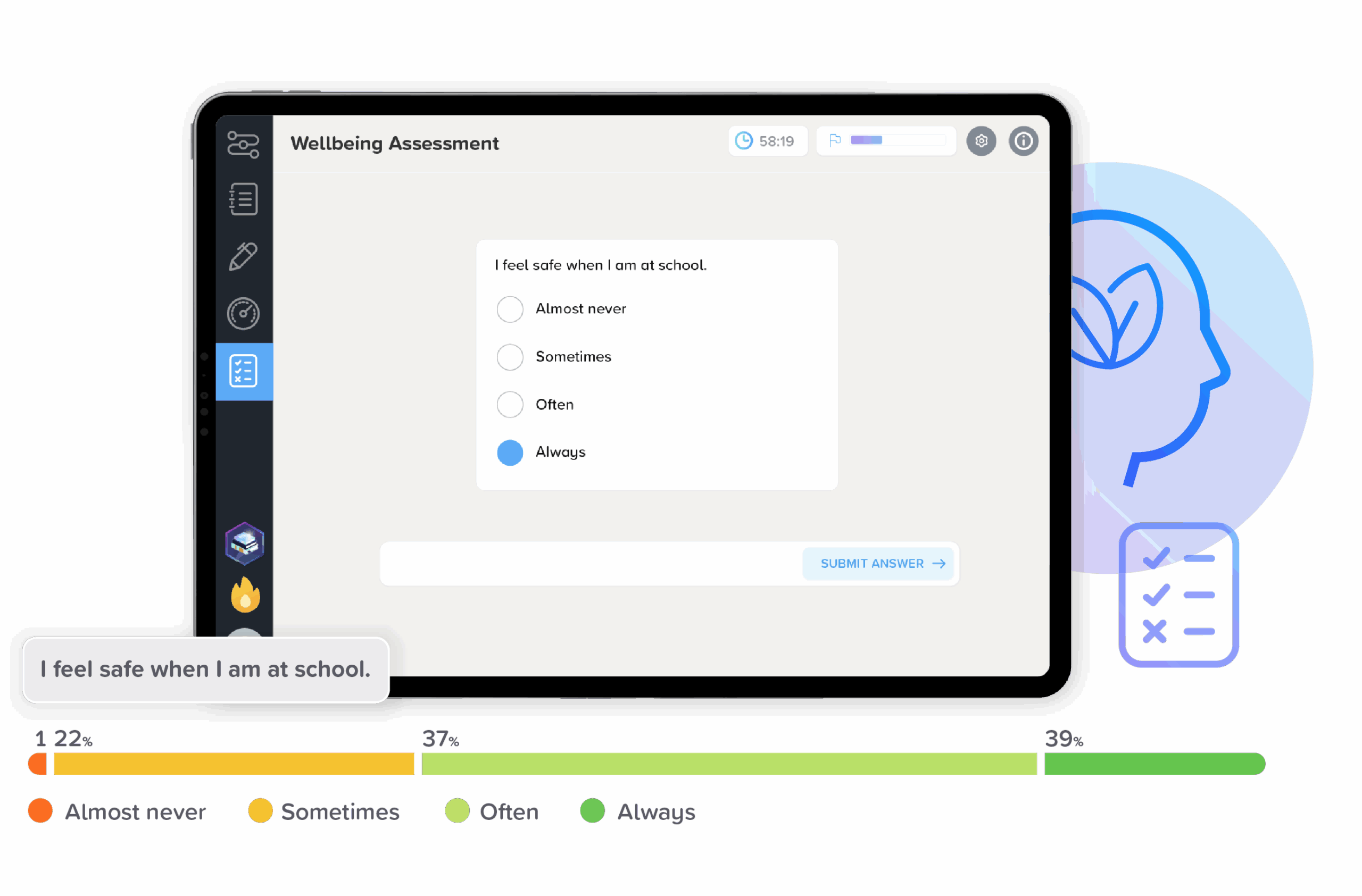
The comprehensive new requirements make manual tracking and personalised intervention increasingly challenging – this is where technology becomes indispensable.
Based on the trusted Student Subjective Wellbeing Questionnaire (SSWQ), an evidence-based, validated questionnaire developed by Renshaw et al., (2015), our new digital tool links directly with key elements of the new Ofsted framework. For example, the five subscales (Joy of Learning, Connectedness, Educational Purpose, Academic Efficacy and Safety) provide comprehensive data for leaders to understand their students and identify those who need support. The tool measures students’ confidence in their academic abilities and sense of meaning and values alignment with education over time, enabling leaders to monitor the effectiveness of character development initiatives and provide targeted intervention for those who lack connection between their learning and future goals.
CENTURY’s Wellbeing Tool supports providers to meet these new expectations with confidence, and includes the following features:
- Two available versions to ensure age-appropriate monitoring for school pupils, post-16 learners and apprentices, fostering open and inclusive environments that amplify student voice.
- An early detection system to identify students in need, supporting the proactive approach valued by Ofsted.
- Quick, regular check-ins (under 5 minutes) providing students with a discreet way to share how they are feeling.
- Reporting that highlights patterns and themes across five areas of wellbeing at class, year group and whole organisation levels, offering a holistic picture of student wellbeing.
- Centralised real-time data that tracks trends over time, evidencing student voice, pastoral interventions and Ofsted readiness.
- Confidentiality respected through initial reports that focus on group-level insights rather than individual responses, while still flagging safeguarding concerns where required.
The 2025 Ofsted framework represents a fundamental shift in education that recognises the interconnection between wellbeing and learning across educational contexts. Organisations that prioritise monitoring and improving the wellbeing of students will not only meet inspection requirements, but create environments where every individual can thrive. CENTURY Wellbeing doesn’t just help institutions to comply with new requirements, it enables the transformation of educational culture across all settings, creating environments that nurture academic success, professional competence, and personal development.
Ready to transform your approach to student wellbeing? Discover how CENTURY’s digital wellbeing tools can help your organisation excel under the new Ofsted framework, creating environments where every learner, from primary pupils to adult apprentices, thrives academically, socially, professionally, and emotionally.
Learn more about the CENTURY Wellbeing Tool for primary and secondary here, for post-16 learners here, or book a demo with one of our team member today.
References
Ofsted (2025a) Schools inspection toolkit. GOV.UK. Available at: https://assets.publishing.service.gov.uk/media/68b9a6b8b0a373a01819fe4b/Schools_inspection_toolkit.pdf
(Accessed: 22 September 2025).
Ofsted (2025b) Further education and skills inspection toolkit. GOV.UK. Available at: https://assets.publishing.service.gov.uk/media/68b975aa3f3e5483efdba9c3/Further_education_and_skills_inspection_toolkit.pdf
(Accessed: 22 September 2025).
Renshaw, T. L., Long, A. C. J., & Cook, C. R. (2015) ‘Assessing adolescents’ positive psychological functioning at school: Development and validation of the Student Subjective Wellbeing Questionnaire’, School Psychology Quarterly, 30(4), pp. 534-552.
Renshaw, T. L. (2024). Student Subjective Wellbeing Questionnaire (SSWQ). Publicly available measure. https://osf.io/48av7
CENTURY in the news
View all News
-

Blog
13th October 2026
How we know our AI marking is accurate
Our AI marking agrees with expert markers on over 95% of decisions. Here is how we built the evaluation dataset behind that figure, and why the process matters more than the number.
Read more
-

News, Blog
13th October 2026
Marking maths the way an examiner would: introducing Maths Prep GENai
Can CENTURY mark the method, not just the answer? Maths Prep GENai, now in beta, marks GCSE and IGCSE maths working against the mark scheme the way an examiner would, then shows learners exactly where they lost the mark and…
Read more