How we write a CENTURY assessment question
Estimated reading time: 5 minutes
By Chris Richards and Karen Lea, CENTURY’s Curriculum & Assessment Development leads
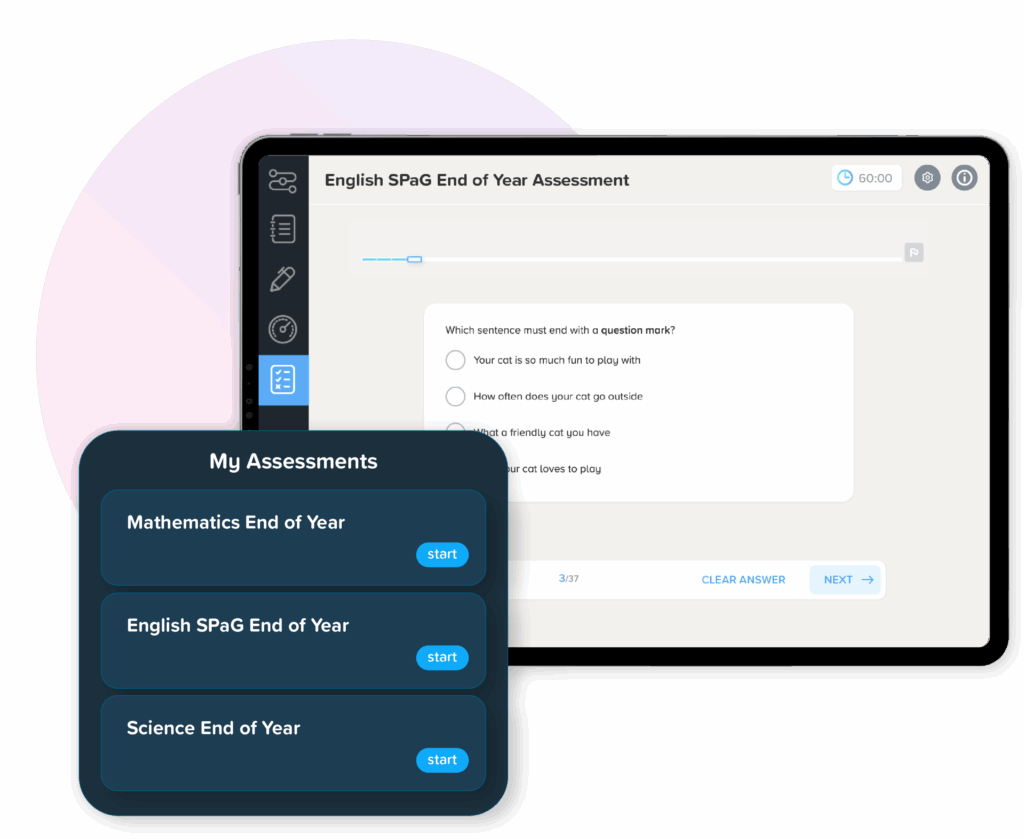
Most of what gets said about assessment is about the results: what the scores show, where the gaps are, what to do next. I want to start a few steps earlier, with something that gets far less attention – where the questions come from in the first place.
It matters more than it sounds as an end-of-year assessment is not just a mark in a book. Its results feed the judgments a school makes at the level that carries weight: what gets sent home on reports, how a cohort has progressed across the year, how a year group sits against the national picture, what goes in front of governors. Decisions are made on the back of those numbers, and made at scale. So the numbers have to be defensible and reliable, which comes back to a quieter question than any of them: is the question underneath doing its job? A weak one doesn’t just cost a mark. It sends a school, and everyone who reads its data afterwards, towards the wrong conclusion.
So it’s worth showing how the questions in the CENTURY Academic Assessments actually get made. There isn’t a shortcut version. Every question goes through the same process and that process is the reason a score can be trusted. This is the work our Curriculum & Assessment Development team does, and here is how it’s done.
It starts with the curriculum
Before anyone writes a single question, we build a blueprint for the assessment. It sets out which parts of the curriculum the assessment has to cover and how much weight each part carries, taken either from the National Curriculum programme of study for that year group or from a relevant test framework. Each part is tied to specific curriculum statements, so there’s nothing vague about what the assessment is measuring.
That blueprint is the first thing that makes a question valid. It’s written to a specific line of the curriculum for a specific year group, not to a general sense of “Year 5 maths”. The blueprint also decides the mix of thinking a question calls for: recalling a fact, interpreting a graph, explaining a process. That spread is deliberate, so an assessment stretches across the range rather than rewarding easy recall alone.
Writing a question that only tests what it should
The questions themselves are written by the subject specialists on the team, each one mapped to a curriculum statement and to the CENTURY nugget that teaches it. That mapping is what lets a pupil who gets a question wrong be pointed straight at the right content afterwards.
How a question is worded matters as much as what it asks. A confusing sentence can make a pupil who knows the content get it wrong and a clumsy set of options can hand the answer to a pupil who doesn’t know it –either by giving the game away in the wording or by making the wrong options so obviously wrong that the right one is left standing, which neither is any use. So every question is held to the same style guide: plain question words where possible, short stems, one clear thing being asked. In multiple-choice questions, the wrong options aren’t filler. They’re built from the mistakes pupils actually make, so a wrong answer is tied to a specific misconception by design, rather than being random options.
Fairness sits in the same place: a question should test what it is meant to test, and nothing else. If a maths question leans on a cultural reference a child happens not to have met, it has stopped being a fair test of maths. So questions are written to be reachable by the full range of pupils in the year group regardless of cultural capital: vocabulary kept in line with what’s typical for the age, subject terms used only where they are part of what’s being assessed and anything that would need knowledge from outside the curriculum deliberately kept out. Where colour carries meaning, like telling apart the lines on a graph, it’s checked for contrast so it works for pupils who see colour differently. A fair question is one where the only thing between a pupil and the right answer is whether they know the content.
Checked, then proven
No question goes live on one person’s judgement. Every single one is reviewed by a different specialist, or by the subject lead, against the curriculum, the wording, the options and the accessibility standards, with an additional SPaG quality assurance from the English team. Once a question is built into the platform, it’s checked again on screen, to confirm it looks and behaves the way it was written to. Then colleagues from outside the team that wrote it, many of them former teachers, work through the questions the way a pupil would, to catch anything that only shows up in use.
After all that, questions are trialled with real pupils within formal item trials before any of them are used in a finalised test. The ones that don’t work as intended are rewritten or cut; only the questions that hold up – shown to be reliable and to discriminate properly across difficulty levels – are kept. We also check that questions behave fairly across different demographic groups of pupils, not just that the overall figures look right. Standardisation comes last: the assessment is completed by a large, nationally representative sample, and that’s what lets a standardised score be read against a national picture rather than in isolation.
Why it’s worth the trouble
None of this is the glamorous part of the job and it never shows up in a headline figure. It’s the part that makes the rest of it trustworthy. When a school reads this year’s end-of-year results, whether that means deciding what a pupil needs next, what a cohort’s scores say about the year, or what to carry into September, it is relying on the questions underneath being sound. That’s the work that goes in long before an assessment ever reaches a single classroom.
Chris Richards and Karen Lea run CENTURY’s Curriculum & Assessment Development team, responsible for designing the CENTURY Academic Assessments and the process described here. Chris is a former secondary school science teacher and senior leader; Karen is a former maths teacher and senior leader.
If you would like to see CENTURY’s academic assessments and wellbeing tool in action, our team would be happy to show you.
CENTURY in the news
View all News
-

News
21st October 2026
International study finds students using CENTURY up to 58% more likely…
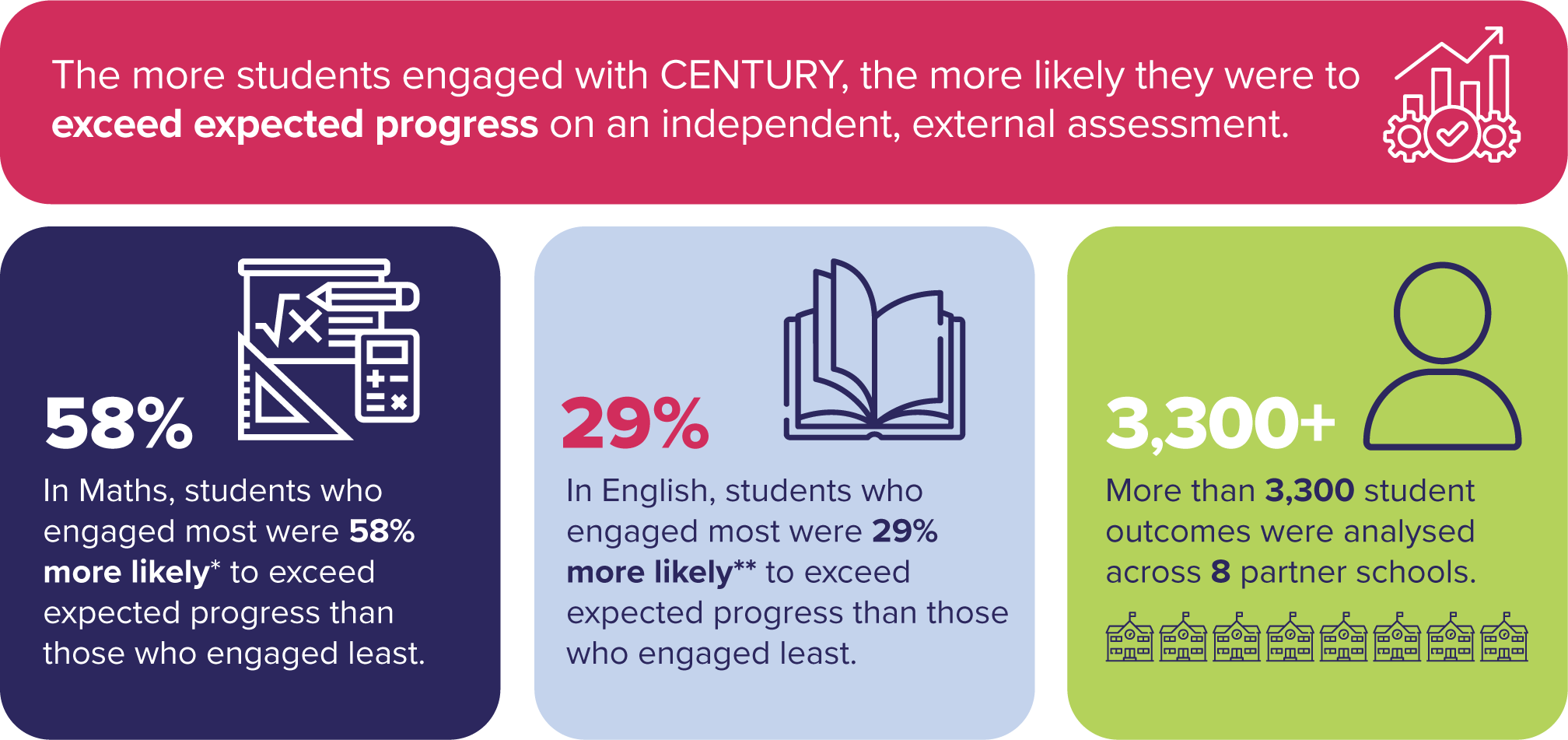
A new study of more than 3,300 progress outcomes across eight Inspired Education Group schools found students who engaged most with CENTURY were up to 58% more likely to exceed expected progress in maths and 29% more likely in English.
Read more
-

Case studies
19th October 2026
How Myanmar Vision International School delivers personalised learning for IGCSE
Myanmar Vision International School in Yangon made CENTURY the main way it teaches IGCSE maths and science. IGCSE Coordinator Andrew Rogers explains how personalised learning, backed by one-to-one support from learning guides, works for a small cohort.
Read more